Gold Market Analysis | November 26, 2026 | Mindwise by Moniwise.in
Imagine buying gold worth ₹1 lakh because everyone said its price would keep rising.
Then, within a few weeks, you open your investment app and discover that gold prices have fallen sharply.
Should you sell before losing more money? Should you buy additional gold at the lower price? Or should you wait because prices might fall even further?
This is the dilemma facing many first-time gold investors in November 2026.
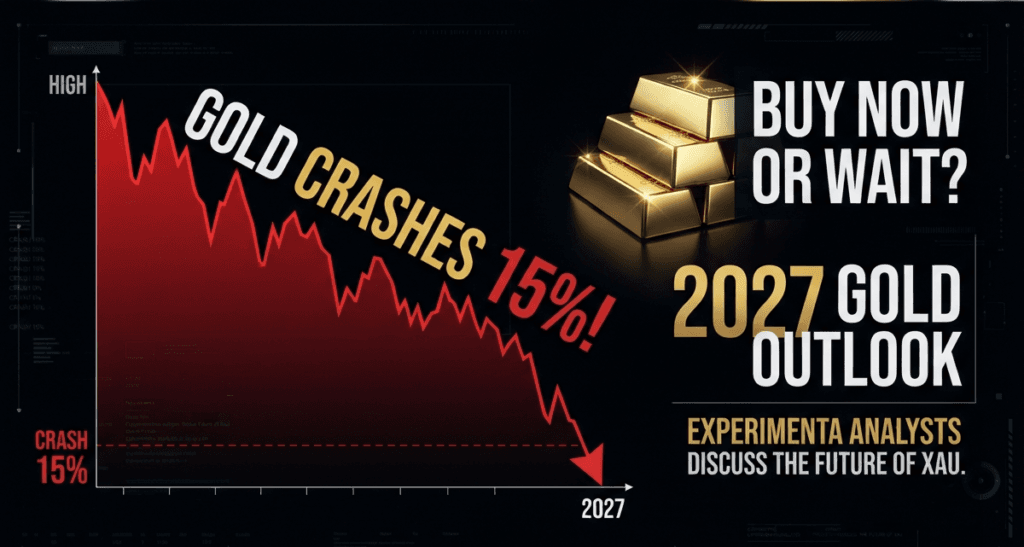
The gold market has experienced a dramatic reversal. India’s benchmark 24K gold price dropped almost 15% between November 10 and November 25, according to India Bullion and Jewellers Association (IBJA) morning rates. International gold also briefly slipped below $3,500 per ounce on November 25.
What makes this correction particularly interesting is that gold still has potential long-term support from central-bank purchases and demand for portfolio diversification. Yet higher interest rates and a stronger US dollar could keep prices under pressure.
So, is gold now a bargain or a potential trap?
In this beginner-friendly guide, we explain when buying gold can make sense, when investors should consider selling, how to reinvest after a correction, and what the future could hold for gold prices in 2027 and beyond.
Gold Price Today: What Is Happening in November 2026?
Gold has fallen significantly from its earlier November levels.
Here are the verified Indian benchmark figures:
| Date | 24K Gold (999) per 10g |
|---|---|
| November 10, 2026 | ₹1,42,420 |
| November 13, 2026 | ₹1,35,884 |
| November 18, 2026 | ₹1,31,505 |
| November 20, 2026 | ₹1,23,584 |
| November 25, 2026 | ₹1,21,310 |
Source: IBJA morning benchmark rates. Prices exclude GST and retail charges and are not individual jewellers’ selling prices.
Between November 10 and November 25, the benchmark declined by approximately ₹21,110 per 10 grams, or 14.8%.
Internationally, Reuters reported spot gold at approximately $3,565 per troy ounce at 8:30 GMT on November 26, following a sharp fall during the previous session.
These figures demonstrate an important lesson: Gold may be considered a safe-haven asset, but its market price is not guaranteed to remain stable.
A falling price does not automatically indicate a buying opportunity. It also does not necessarily mean gold has lost its longer-term investment relevance.
Why Are Gold Prices Falling So Sharply?
Understanding the reasons behind a price decline is more useful than trying to guess tomorrow’s exact price.
1. Higher US interest rates reduce gold’s appeal
Gold does not pay regular interest or dividends.
When investors expect interest rates to rise, interest-bearing investments such as government bonds may become more attractive.
On November 26, Reuters reported that strong US inflation data had reinforced expectations of additional Federal Reserve rate increases.
Higher interest rates can increase the opportunity cost of holding gold, putting pressure on its price.
2. A stronger dollar can hurt gold demand
Gold is internationally priced in US dollars.
When the dollar strengthens, gold can become more expensive for buyers using other currencies.
This can weaken international demand, although the relationship is not perfectly consistent.
For Indian investors, there is an additional complication: the USD/INR exchange rate.
A weaker rupee can cushion some of the decline in international gold prices, while a stronger rupee can amplify the decline in domestic prices.
This means a 10% fall in international gold does not always translate into exactly a 10% fall in India.
3. Investors are taking profits and reducing risk
Gold attracted considerable investment interest earlier in 2026.
But when market conditions change, some investors sell to protect profits, raise cash or reduce risk.
Large institutional selling can accelerate a price decline.
Other investors may then sell because they fear that the downturn will continue.
This is one reason why a market can temporarily move faster than fundamentals alone would suggest.
4. Gold is competing with other investments
Investors constantly compare gold with bonds, cash, equities and other assets.
If bond yields rise or investors become optimistic about economic growth, some money may move away from gold.
Conversely, economic uncertainty, geopolitical tensions or concerns about financial stability can renew demand.
5. Fear itself can intensify the correction
Once gold prices begin falling, alarming headlines can create psychological pressure.
An investor who purchased gold at ₹1,40,000 per 10 grams may feel desperate to exit when the price approaches ₹1,20,000.
Another investor may see the same decline and assume that a substantial rebound is guaranteed.
Both reactions can be dangerous if decisions are driven by emotion instead of a financial plan.
Should You Buy Gold Now or Wait for a Bigger Fall?
This is the most important question for new investors.
For most beginners with a long investment horizon, gradual buying is generally more sensible than trying to identify the exact market bottom.
Why?
Because nobody knows whether gold will rebound immediately, trade sideways for months or fall another 10–15%.
Consider three possibilities:
| What happens next? | Investor’s challenge |
|---|---|
| Gold rebounds strongly | Waiting indefinitely could mean missing the recovery |
| Gold falls another 10% | Investing everything immediately could produce further losses |
| Gold remains volatile | Repeated buying and selling could increase costs and mistakes |
Trying to perfectly time the market requires making two correct decisions: when to buy and when to sell.
That is considerably harder than it appears.
A practical first-time investor strategy
Suppose you have already decided that ₹30,000 is an appropriate amount to allocate to gold, after considering your emergency savings and other investments.
Rather than investing the entire ₹30,000 immediately, you could use this illustrative plan:
| Instalment | Amount | Timing |
|---|---|---|
| First | ₹10,000 | Initial investment |
| Second | ₹10,000 | Approximately one month later |
| Third | ₹10,000 | Approximately two months later |
| Total | ₹30,000 | Three instalments |
This is called staggered investing.
It reduces dependence on one particular entry price, although it cannot prevent losses or guarantee a better average purchase price. If gold rises continuously, staggered purchases may actually cost more than buying everything initially.
The purpose is to create discipline, not to promise superior returns.
Important: This example assumes the investor has adequate emergency savings, no urgent high-interest debt problem and a suitable long-term investment horizon.
How Much Gold Should a First-Time Investor Own?
One mistake beginners make is investing too heavily in an asset simply because its price has recently fallen.
Gold can help diversify a portfolio, but it should not automatically become the entire portfolio.
An illustrative starting allocation might be 5%–10% of a diversified long-term investment portfolio, depending on individual goals and risk tolerance.
For example:
| Total investment portfolio | Illustrative 5%–10% gold allocation |
|---|---|
| ₹1 lakh | ₹5,000–₹10,000 |
| ₹3 lakh | ₹15,000–₹30,000 |
| ₹5 lakh | ₹25,000–₹50,000 |
| ₹10 lakh | ₹50,000–₹1 lakh |
These are examples, not universal allocation rules.
Someone who already owns substantial gold jewellery may need less additional gold exposure.
A person saving for a house down payment within a year may need to prioritise capital stability rather than gold.
And a young investor with decades ahead may need a broader investment strategy that includes growth-oriented assets as well as protective holdings.
The central lesson is simple:
Gold should support your financial plan, not replace it.
Gold Price Prediction 2027: Will Gold Recover or Fall Further?
There are reasons to remain interested in gold’s long-term prospects, but the near-term outlook is uncertain.
According to the World Gold Council’s November 2026 research, central banks purchased approximately 321 tonnes of gold during the third quarter of 2026.
Gold-backed ETFs also recorded inflows of approximately 211 tonnes during that quarter.
This shows continuing interest from major institutional and reserve-management buyers.
However, strong demand during an earlier quarter does not guarantee that prices will rise from current levels.
The World Gold Council also warned that higher interest rates, rising bond yields and a stronger dollar could weigh on investment demand.
Three realistic gold-market scenarios for 2027
Scenario 1: Bullish recovery
Gold could recover if:
- The Federal Reserve eventually signals an end to its interest-rate tightening cycle.
- Bond yields decline or the US dollar weakens.
- Central banks continue buying gold.
- Financial-market or geopolitical uncertainty increases.
- Gold ETF investment flows recover strongly.
Under this scenario, gold may regain investor interest and recover from its correction.
However, the timing and size of any recovery remain uncertain.
Scenario 2: Further price decline
Gold could remain under pressure if:
- Inflation remains stubbornly high.
- Interest rates rise further or stay elevated longer than expected.
- The US dollar strengthens.
- Investors favour interest-bearing assets.
- Gold investment funds experience sustained withdrawals.
A significant previous decline does not prevent further selling.
Scenario 3: Extended sideways movement
Gold could also fluctuate within a broad range without establishing a sustained upward or downward trend.
This can happen when strong central-bank demand is offset by high interest rates and uncertain investor sentiment.
For first-time investors, such an environment reinforces the importance of diversification and a long-term plan.
What is our gold outlook?
Gold retains a plausible long-term role as a diversifying asset, particularly given official-sector demand and global economic uncertainty.
But the November sell-off makes short-term predictions especially unreliable.
A sustained recovery would become more convincing if interest-rate expectations stabilise, investment demand improves and prices begin establishing a more consistent upward trend.
No particular 2027 gold-price target should be treated as guaranteed.
When Should You Sell Gold?
Buying gold receives most of the attention.
Selling correctly is equally important.
There is no rule saying that every investor must sell after a 10%, 20% or 30% profit.
The correct decision depends on the purpose of the investment.
1. Sell when you need money for an important financial goal
Suppose you invested in gold to help fund a home purchase, education expense or other planned payment.
If that expense is approaching, reducing exposure may be reasonable even if gold prices could rise further.
You cannot rely on the market to deliver a higher price exactly when you need the money.
For essential near-term expenses, gradually moving funds into more stable, accessible investments can be more important than maximising returns.
2. Sell part of your holdings when gold becomes too large a share of your portfolio
Imagine you planned to maintain a 7% allocation to gold.
After a substantial rally, gold represents 12% of your total portfolio.
You could consider selling enough gold to move closer to the original allocation.
This is called portfolio rebalancing.
It prevents one asset from gradually dominating your finances.
Rebalancing can also be done by directing new savings into underweight assets rather than selling immediately.
3. Consider selling when the original investment reason changes
You might have purchased gold because you wanted to diversify a concentrated equity portfolio.
If your investments, goals or financial circumstances have changed, reassess whether the same gold allocation is still appropriate.
Similarly, if you bought gold for short-term speculation and your original risk limit has been breached, following a pre-established exit plan may be more sensible than indefinitely hoping for recovery.
4. Sell speculative positions when your predetermined risk limit is reached
This is mainly relevant to traders, not long-term investors.
A trader who buys gold ETFs or derivatives based on a short-term strategy should define the exit conditions before entering.
Using borrowed money or highly leveraged gold futures to recover losses can be especially dangerous.
Beginners should generally avoid leveraged commodity trading.
5. Consider taxes and costs before selling
Selling gold can trigger capital gains tax.
Jewellery may also involve deductions related to purity, buyback charges and the original making charges.
A profitable-looking sale can become much less attractive once all costs are considered.
Do not sell merely because the market is temporarily red or because an alarming headline predicts an imminent collapse.
When Should You Reinvest in Gold After Selling?
Many investors make a costly mistake.
They sell gold during a correction and then wait indefinitely for the lowest possible price.
Sometimes the price falls further.
Sometimes it rebounds before they can buy again.
The solution is to plan reinvestment around your financial goals and asset allocation, rather than relying on an exact price prediction.
Strategy 1: Reinvest gradually
If you have decided to rebuild your gold allocation, divide the intended investment into smaller purchases over a scheduled period.
This can reduce emotional pressure and avoid depending on a single purchase date.
Strategy 2: Reinvest when your portfolio falls below its target gold allocation
Suppose your target gold allocation is 7%.
After a market decline, gold accounts for only 4% of your portfolio.
If your financial goals remain unchanged, you could use new savings or a planned rebalance to move gradually toward your target.
This is a more systematic approach than waiting for a particular gold price.
Strategy 3: Wait for market stabilisation if you are a short-term trader
A short-term trader may prefer to wait for evidence that selling pressure is easing.
Examples include stabilising price movements, improving market liquidity and a series of higher price lows.
These signals are imperfect. A temporary recovery can fail, and a market can fall further even after appearing stable.
Long-term investors do not necessarily need to use technical signals for every purchase.
Strategy 4: Account for transaction costs and taxes
Selling a Gold ETF and immediately repurchasing it can create brokerage costs and a taxable transaction.
Physical gold involves even greater friction because of GST, retail premiums and buyback spreads.
Frequent selling and reinvesting may therefore reduce returns, even if some price predictions are correct.
The goal is not to sell at every peak and buy at every bottom. The goal is to maintain an investment strategy you can follow consistently.
Physical Gold vs Gold ETF vs Gold Mutual Fund: Which Is Best for Beginners?
In India, investors have several ways to gain exposure to gold.
Not all methods are equally convenient or cost-effective.
| Investment type | Main advantage | Main disadvantage |
|---|---|---|
| Physical gold coins or bars | Direct ownership of metal | GST, premiums, storage and resale concerns |
| Gold jewellery | Can be worn and used personally | Making charges and buyback deductions |
| Gold ETF | Exchange-traded, no personal storage needed | Demat account, expenses and market-price differences |
| Gold mutual fund / Gold FoF | SIP-friendly; no demat generally required | Fund expenses and possible additional underlying costs |
| Sovereign Gold Bonds | Interest income and gold-linked redemption value | Limited liquidity, maturity rules, availability and tax complexities |
| App-based digital gold | Convenient small purchases | SEBI regulatory protection concerns and transaction costs |
Why Gold ETFs can be a practical starting point
For someone whose goal is investment rather than jewellery ownership, a Gold ETF can be convenient.
It allows investors to buy exchange-listed units through a trading and demat account.
When choosing a Gold ETF, compare:
- Expense ratio
- Tracking difference and tracking error
- Liquidity and bid-ask spread
- Trading volume and fund size
- The difference between the traded unit price and its indicative asset value
A Gold ETF remains exposed to changes in gold prices. It is not a guaranteed-return product.
What about digital gold?
Digital gold is often promoted through payment apps and online platforms.
However, the Securities and Exchange Board of India issued a public caution in November 2025 about digital-gold products operating outside its securities regulatory framework.
Beginners should not assume app-based digital gold provides the same regulatory safeguards as a SEBI-regulated Gold ETF.
What about Sovereign Gold Bonds?
Sovereign Gold Bonds have different investment and tax characteristics.
A particularly important rule took effect in April 2026: the capital gains exemption on redemption at maturity generally requires the individual investor to have subscribed at the original issue and held the bond continuously until maturity.
Buying an older SGB on the stock exchange does not provide that same exemption.
Investors should also examine liquidity, the remaining maturity period and the trading price before considering older bonds.
Gold Tax Rules in India: What Happens When You Sell in 2026?
Taxes can make a substantial difference to the amount of profit you actually keep.
For typical resident individual investors, the broad rules are:
| Investment | Long-term holding period | General LTCG treatment |
|---|---|---|
| Physical gold | More than 24 months | 12.5% without indexation |
| Gold ETF | More than 12 months | 12.5% without indexation |
| Gold mutual fund / FoF | More than 24 months | 12.5% without indexation |
| Digital gold | More than 24 months | Generally 12.5% without indexation |
| SGB | Depends on acquisition and disposal | Specific rules; qualifying original-issue bonds held to maturity have a capital-gains exemption |
Short-term gains are generally taxed at the applicable income-tax slab rate for these forms of gold investment.
Applicable surcharge and cess may increase the tax liability. The ₹1.25 lakh annual long-term gains exemption available to qualifying equity investments does not apply to Gold ETF gains.
Physical gold generally also attracts 3% GST on purchase, while jewellery can involve additional making charges.
For example, if you buy gold worth ₹1,00,000 and sell it for ₹1,20,000, the ₹20,000 difference is not necessarily your final profit.
Purchase costs, sales expenses and applicable capital gains tax must also be considered.
Always verify the applicable rules for your holding period and transaction before selling, particularly for inherited gold, older purchases or SGBs.
A Simple Gold Investment Roadmap for First-Time Investors
If you are considering your first gold investment, follow a structured approach rather than responding to every market headline.
Step 1: Build financial security first
Maintain adequate emergency savings and address expensive debt before investing money you may need unexpectedly.
Step 2: Define the purpose
Are you purchasing gold for long-term diversification, future jewellery needs or short-term trading?
Different goals require different decisions.
Step 3: Choose an appropriate amount
Decide how much of your diversified portfolio should be allocated to gold.
Avoid investing your entire savings in one asset.
Step 4: Understand the product
A Gold ETF, gold mutual fund and physical gold have different costs, liquidity and tax implications.
Choose the option that matches your requirements.
Step 5: Create a purchase schedule
If current prices feel uncertain, staggered purchases may be more manageable than a large one-time investment.
Step 6: Decide in advance when to review or sell
Set a periodic review schedule, such as every six or twelve months, and review after major financial changes.
Consider rebalancing if your gold allocation moves materially away from its intended level.
Step 7: Avoid emotional decisions
Do not assume that every dip is a bargain or that every rally must be followed by a crash.
Step 8: Track your actual returns
Include expenses, taxes and other charges, not just the difference between purchase and sale prices.
Mindwise Special: The Psychology of Buying Gold at the Wrong Time
Consider two fictional investors.
Investor A buys gold after hearing repeated stories about record-high prices.
The investor fears missing out and invests a large amount immediately.
When prices fall, anxiety takes over. The investor sells at a loss and later watches the market recover.
Investor B begins with a diversified portfolio, defines a modest gold allocation and follows a planned investment schedule.
If gold falls, Investor B reviews the reasons for the decline without automatically abandoning the plan.
Investor B may still lose money.
But the investment decision is driven by preparation rather than emotional reactions.
That distinction is important.
There are three psychological mistakes to watch for.
Fear of missing out (FOMO): Buying because everyone else seems to be making money.
Loss aversion: Selling simply because a temporary loss feels unbearable.
Anchoring: Believing gold must return to the price at which you originally purchased it.
The market does not know your entry price.
What matters is whether the investment still makes sense given your financial objectives and current information.
Gold Investment FAQ
Is November 2026 a good time to buy gold?
Gold has corrected substantially, which may make gradual accumulation worth considering for suitably diversified, long-term investors. However, further declines are possible, and the recent correction does not confirm a market bottom.
Should I invest ₹10,000 in gold today?
If ₹10,000 fits your investment budget and gold allocation, you could consider investing part of it initially and spreading the remaining purchases over time. If it is money needed soon, a volatile asset such as gold may be unsuitable.
Will gold prices increase in 2027?
Gold could benefit from central-bank purchases, weaker interest-rate expectations or geopolitical uncertainty. It could also decline further if interest rates remain high and investment demand weakens. No outcome is guaranteed.
Should I sell gold after making a 20% profit?
Not automatically. Review your investment purpose, portfolio allocation, time horizon, transaction costs and taxes. A partial sale may make sense for rebalancing or funding an important goal.
What if I buy gold today and the price falls another 10%?
A further decline would reduce the market value of your holdings. If your investment was appropriately sized and intended for the long term, you can reassess the fundamentals and your allocation without automatically panic selling. Never invest money you cannot afford to have exposed to price fluctuations.
When is the best time to reinvest in gold?
There is no reliably identifiable perfect date. A scheduled purchase plan or allocation-based rebalancing approach may be more practical for beginners than predicting the market bottom.
Is gold better than the stock market?
They perform different roles. Stocks represent ownership in businesses and can generate earnings and dividends. Gold does not generate business income or interest, but may diversify a portfolio and behave differently during some periods of stress. Neither guarantees profits.
Should I buy gold jewellery for investment?
Jewellery may be suitable for personal or cultural purposes. For purely financial exposure, the making charges, GST and resale deductions can make it less efficient than some financial gold products.
Final Verdict: Buy, Sell or Wait?
The nearly 15% decline in Indian benchmark gold prices during November 2026 is a reminder that even traditional safe-haven assets can experience severe volatility.
For a first-time investor, the most important decision is not whether gold will rise tomorrow.
It is whether gold belongs in your financial plan in the first place.
If you have no gold exposure: Consider whether a modest allocation fits your goals, and favour a planned approach over investing everything immediately.
If you already hold gold: Review your time horizon, purchase costs, financial needs and portfolio allocation before deciding to sell.
If you recently sold gold: Avoid rushing to repurchase because of a short-term bounce. Rebuild your position only when doing so fits your intended allocation and risk tolerance.
If you are investing money needed soon: Prioritise the security and availability of that money rather than trying to profit from a volatile market.
Gold has potential long-term investment value, but it has no guaranteed future price.
The smartest strategy is not the one that predicts every move correctly.
It is the one that prevents a single wrong prediction from damaging your financial future.
For more investment education, market explanations and financial psychology insights, follow Moniwise.in.
Sources and Research
- India Bullion and Jewellers Association — Official gold benchmarks
- Reuters — Gold drifts lower as Fed rate-hike fears loom, November 26, 2026
- World Gold Council — Gold Demand Trends Q3 2026
- World Gold Council — Q3 2026 Gold Outlook
- SEBI — Caution Regarding Digital Gold
- Income Tax Department — Budget 2026 FAQs
- Economic Times — Gold Investment Tax Treatment
Market data disclaimer: This article was researched on November 26, 2026. IBJA figures used in the historical comparison are morning benchmarks, not retail quotes. International gold quotations are time-sensitive and may have changed.
Financial disclaimer: This article is for educational and informational purposes only and does not constitute personalised investment, trading or tax advice. Gold prices can fall as well as rise. Readers should consider their financial circumstances and consult appropriate qualified professionals where necessary.